
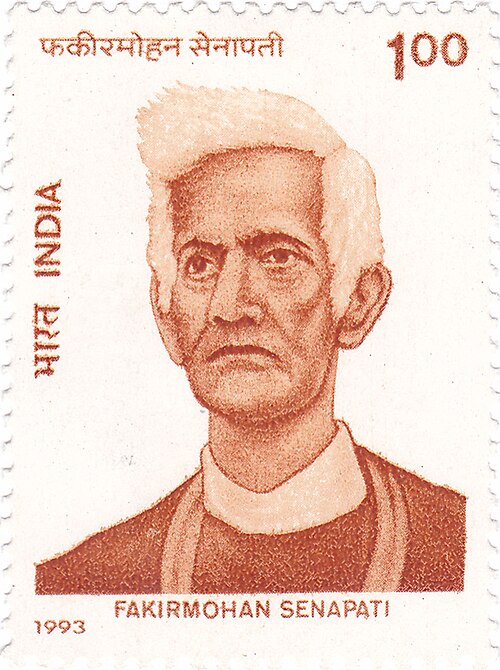
Fakir Mohan Senapati
Poet • 1843-1918
About
Fakir Mohan Senapati (1843-1918), often honored as "Utkala Byasa Kabi" (Odisha's Vyasa), was a pivotal figure in Indian literature and a driving force in establishing the distinct identity of the Odia language. He is widely regarded as the father of modern Odia literature and Odia nationalism. Born on January 13, 1843, in Mallikashpur, Balasore, in the Bengal Presidency of British India (present-day Odisha), his early life was marked by hardship. He lost both his father, Laxman Charan Senapati, and mother, Tulasi Devi Senapati, in early childhood and was raised by his paternal grandmother, Kuchila Dei. Originally named Braja Mohan, he received the name Fakir Mohan due to a vow his grandmother took for his recovery from an illness. Despite facing dire poverty and a lack of formal education, Senapati possessed an immense thirst for knowledge. He worked various odd jobs, including in a sail-stitching business and a salt-manufacturing unit, to support himself and his studies. He managed to learn not only Odia but also Bengali, Sanskrit, and English. Fakir Mohan Senapati's multifaceted contributions include: Pioneering Modern Odia Prose: He introduced the genres of novels, short stories, and autobiography to Odia literature, giving a distinctively creative shape to Odia prose. His works broke away from traditional romantic and imaginative themes, focusing instead on social realism and the struggles of ordinary people. Novels: His four influential novels, written between 1897 and 1915, vividly portray the socio-cultural conditions of Odisha during the 18th and 19th centuries. These include: Chha Maana Atha Guntha (Six Acres and a Third, 1902): Considered the first Indian novel to address the exploitation of landless peasants by feudal lords. Mamu (The Uncle, 1913) Lachhama (1914): A historical romance depicting the anarchical conditions in Odisha during Maratha invasions. Prayaschita (Penance, 1915) Short Stories: His short story "Rebati" (1898) is widely recognized as the first Odia short story. He wrote over 20 short stories, collected in volumes like Galpaswalpa (Stories: A Few, 1917), known for their social commentary, humor, and psychological depth. Other notable stories include "Patent Medicine," "Daka Munshi," and "Adharma Bitta." Poetry: He began his literary career as a poet. His long satirical poem Utkala Bhramanam (Tour of Odisha, 1892) offers a humorous commentary on the state of affairs in Odisha. His collections of poems like Pushpamala (Garland of Flowers, 1894) and Upahara (Gift, 1895) often expressed personal emotions and grief. He was also the first Odia poet to compose lyrics on the lives of tribal people and on mundane aspects of life. Autobiography: His Atma Jivan Charita (My Life Story), published posthumously in 1927, is considered the first autobiography in Odia literature and provides valuable insights into the social and literary history of his time. Translator and Reformer: Senapati translated significant Sanskrit classics like the Ramayana, Mahabharata, and Bhagavad Gita into simple, accessible Odia, making them available to the common populace. He also worked as a teacher, translator, and civil servant, using his experiences to inform his writings and advocate for social reform, including women's education and challenging superstitions. Champion of Odia Language: At a time when the distinctness of the Odia language was questioned, Fakir Mohan played a crucial role in asserting and preserving its identity. He established the P.M. Senapati & Co Utkal Press in Balasore in 1868, publishing newspapers like Bodhadayini and Balasore Sambad Vahika, which contributed to the growth of Odia literature and journalism. He actively promoted the use of colloquial Odia, bridging the gap between earlier Sanskritized writings and the common masses. Fakir Mohan Senapati's enduring legacy is celebrated throughout Odisha, with institutions like Fakir Mohan College and Fakir Mohan University in Balasore named in his honor. His works continue to be studied and admired for their realism, social consciousness, and timeless relevance.