Madhusudan Das
Poet • (1848–1934)
About
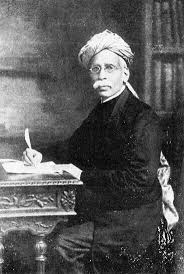
Madhusudan Das (1848–1934), affectionately known as "Kulabruddha" (Grand Old Man), "Madhu Babu," and "Utkal Gouraba" (Pride of Utkal), was a towering figure in Odisha's history. He was a visionary leader, social reformer, industrialist, lawyer, and statesman who played an instrumental role in shaping the identity of modern Odisha. Born on April 28, 1848, in Satyabhamapur, near Cuttack, Madhusudan Das was initially named Choudhury Gobinda Ballabha Das. He was the first Odia to achieve a B.A. degree (1870), an M.A. degree (1873), and an LL.B. degree (1878) from Calcutta University, making him Odisha's first graduate and advocate. After practicing law in Calcutta, he returned to Cuttack in 1881 to serve his homeland. His multifaceted contributions include: * **Architect of Odisha Province:** Madhusudan Das is most celebrated for his relentless efforts in the unification of Odia-speaking areas. He founded the **Utkal Sammilani (Utkal Union Conference)** in 1903, which spearheaded the movement for a separate linguistic state. His persistent advocacy led to the formation of the Orissa Province (present-day Odisha) on April 1, 1936. His birthday, April 28, is observed as **Lawyers' Day** in Odisha. * **Legal Luminary:** A highly respected lawyer, he handled significant cases like the Puri temple administration case and the Keonjhar Riots Case. He was a source of inspiration for lawyers in Odisha and India. He also championed reforms in the legal field, leading to the amendment of the Legal Practitioner Act in 1923. * **Social Reformer:** Madhusudan Das was a staunch advocate for social upliftment. He worked tirelessly for women's empowerment and education, establishing Odisha's first Girls' High School. He promoted gender equality, and his adopted daughter, Sudhanshubala Hazra, is considered India's first female lawyer, a feat achieved through his efforts in court. He also worked for the upliftment of the Dalit community, emphasizing skill development and fighting against untouchability. Mahatma Gandhi reportedly acknowledged Madhusudan Das's insights on the economic drain caused by untouchability. * **Industrialist and Economic Visionary:** He believed in industrialization and self-sufficiency for Odisha. He founded the **Utkal Tannery** in 1905, a pioneering shoe and leather products factory that employed numerous workers, including those from marginalized communities. He also established "Odisha Art Wares" in 1897 to promote and market traditional Odia filigree and other handicrafts, which gained international recognition. He encouraged the revival of indigenous industries, including salt manufacturing. * **Political Leader and Legislator:** He was associated with the Indian National Congress (1886-1903) and founded the Utkal Sabha in 1888. He was the first Odia to become a member of both the Bengal provincial legislative council and the Central Legislative Assembly of India. Under the Diarchy scheme of the Government of India Act, 1919, he served as a Minister for Local Self-Government, Medical Public Health, and Public Works in the Bihar and Orissa Province (1921-1923). He famously resigned from his ministership on ideological grounds in 1923, becoming the first Indian to do so. * **Writer and Poet:** Madhusudan Das was also a prolific writer and poet, with patriotism being a central theme in his works. He penned articles and poems in both English and Odia, including "Utkal Santan," "Jati Itihash," and "Jananira Ukti." Madhusudan Das passed away on February 4, 1934, just two years before his dream of a unified Odisha was realized. His life remains a testament to his dedication to the progress and pride of Odisha.